UX / UI Design

Client // Vodafone - Emerging Tech & Cyber Innovation
The Brief
To redesign internal communication & collaboration tools used within the company.
Key Challenges
Inconsistent branding and user experience across internal presentations and digital platforms. Fragmented access to content and resources stored in multiple locations.Lack of centralized communication tools to support cross-functional collaboration.
My Role
Leading UX / UI design initiatives across a range of internal tools and platforms, with a focus on improving usability, access to information, and visual consistency for both team members and stakeholders.
UX Research & Facilitation - Conducted workshops using Mural with direct and adjacent teams to identify user pain points and uncover process inefficiencies. Mapped journeys and gathered qualitative data through collaborative exercises and surveys (Microsoft Forms).

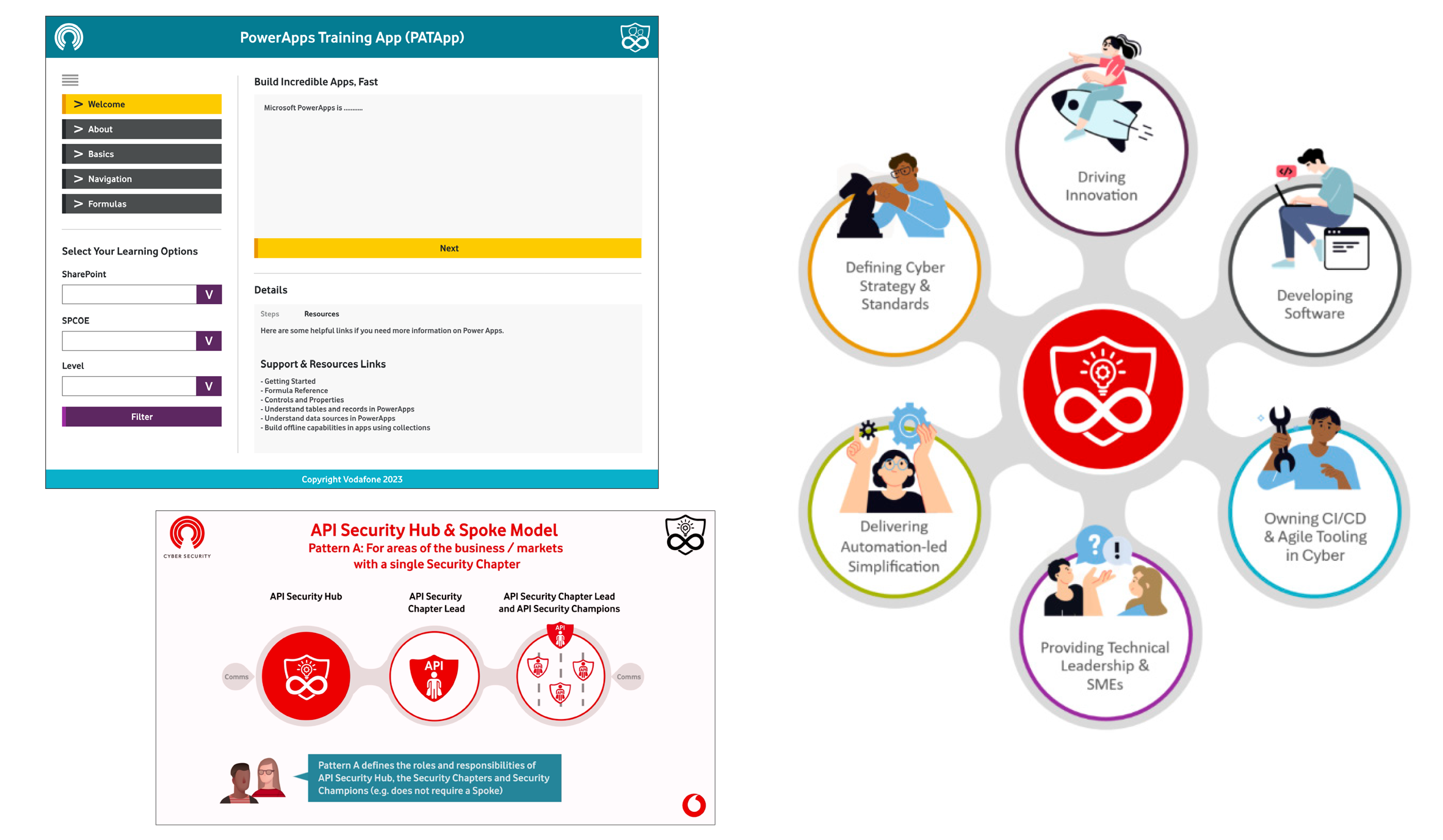
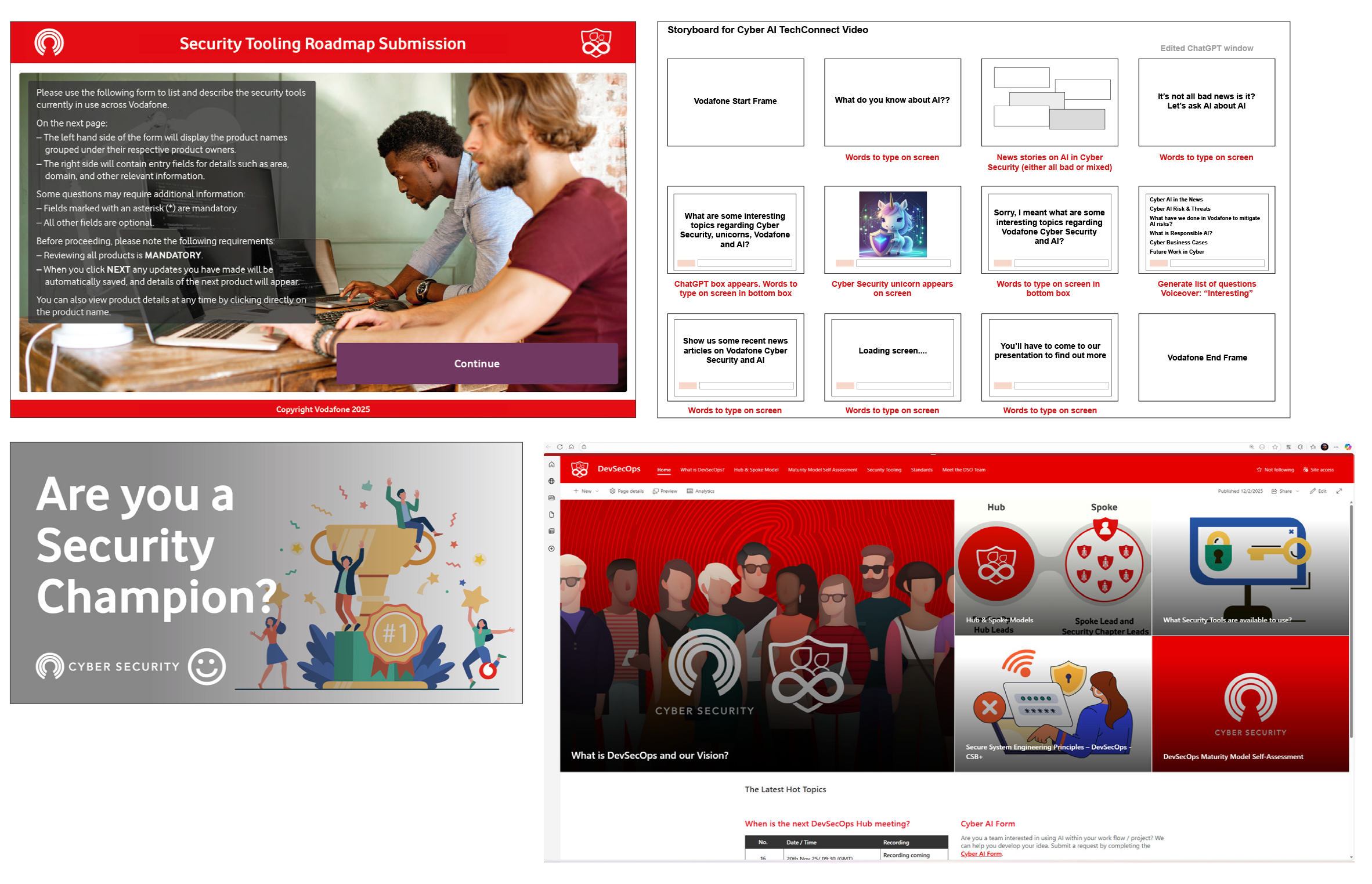
Information Architecture & Content Strategy - Restructured content and navigation systems for internal SharePoint sites. Developed site maps, wireframes, and storyboards to guide a user-centered redesign.

UI Design & Visual Systems - Designed branded, responsive UI components and visual assets (icons, logos, timelines) for apps and internal platforms including a Maturity Model Assessment and CAT (Cyber Assistant Tool).

Motion & Interaction Design - Created micro-animations and explainer videos to enhance learning, event engagement, and team communications. Delivered end-to-end production from storyboard to final render, all aligned with brand guidelines.

Strategic Communication Design - Created high-level presentation templates and visual content to support leadership and team meetings. Ensured that all outputs followed brand and accessibility standards.

Outcomes
1// Increased usability and user satisfaction across internal platforms (measured through informal feedback and post-launch surveys).

2// Improved stakeholder engagement through more cohesive branding and clearer visual communication.

3// Consolidated scattered information into centralised, user-friendly SharePoint hubs.
- Enhanced collaboration between teams through workshops and visual planning tools.

UX / UI Design

Client // Crafts Building Solutions Limited
The Brief
The client, an independent building contractor, wanted to expand his business and also work with other contractors/ architects. 
The Problem
The method for showcasing his business capabilities relies on showing clients and contractors photos stored on his phone. This approach is inconvenient, inconsistent, and limits his ability to reach a broader audience. From a UX perspective, the experience fails to provide clarity, professionalism, or ease of access—especially in situations where first impressions are critical. He needed a more structured, accessible, and compelling way to present his work so that potential clients can quickly understand the value he offers and feel confident in his expertise.
Outcome
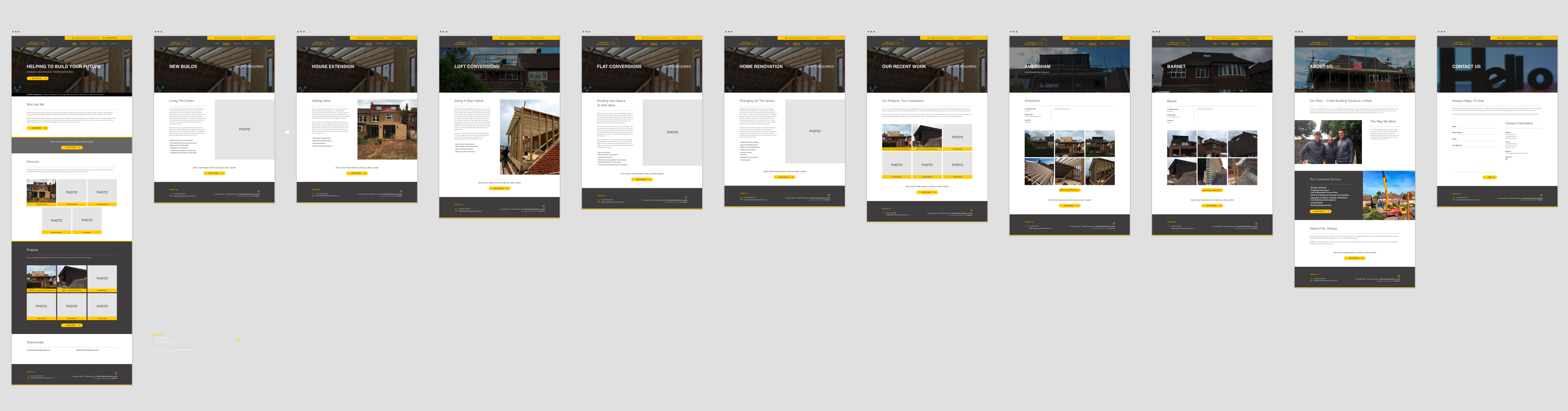
The challenge was to create a digital experience that reassures potential customers, builds trust, and clearly communicates that this builder is capable of delivering high-quality work without complications. The solution was a professional, fully responsive website designed to establish credibility and enable the client to:

- Reach a wider audience

- Clearly communicate his services and capabilities

- Showcase completed projects with both images and contextual descriptions

- Build trust through customer testimonials, a key component in demonstrating reliability
UX Process
To achieve this, the following UX activities were undertaken:

- Client interviews to understand goals, pain points, and expectations

- Competitor research to identify industry standards and opportunities

- Creation of a user flow diagram to define key journeys and navigation

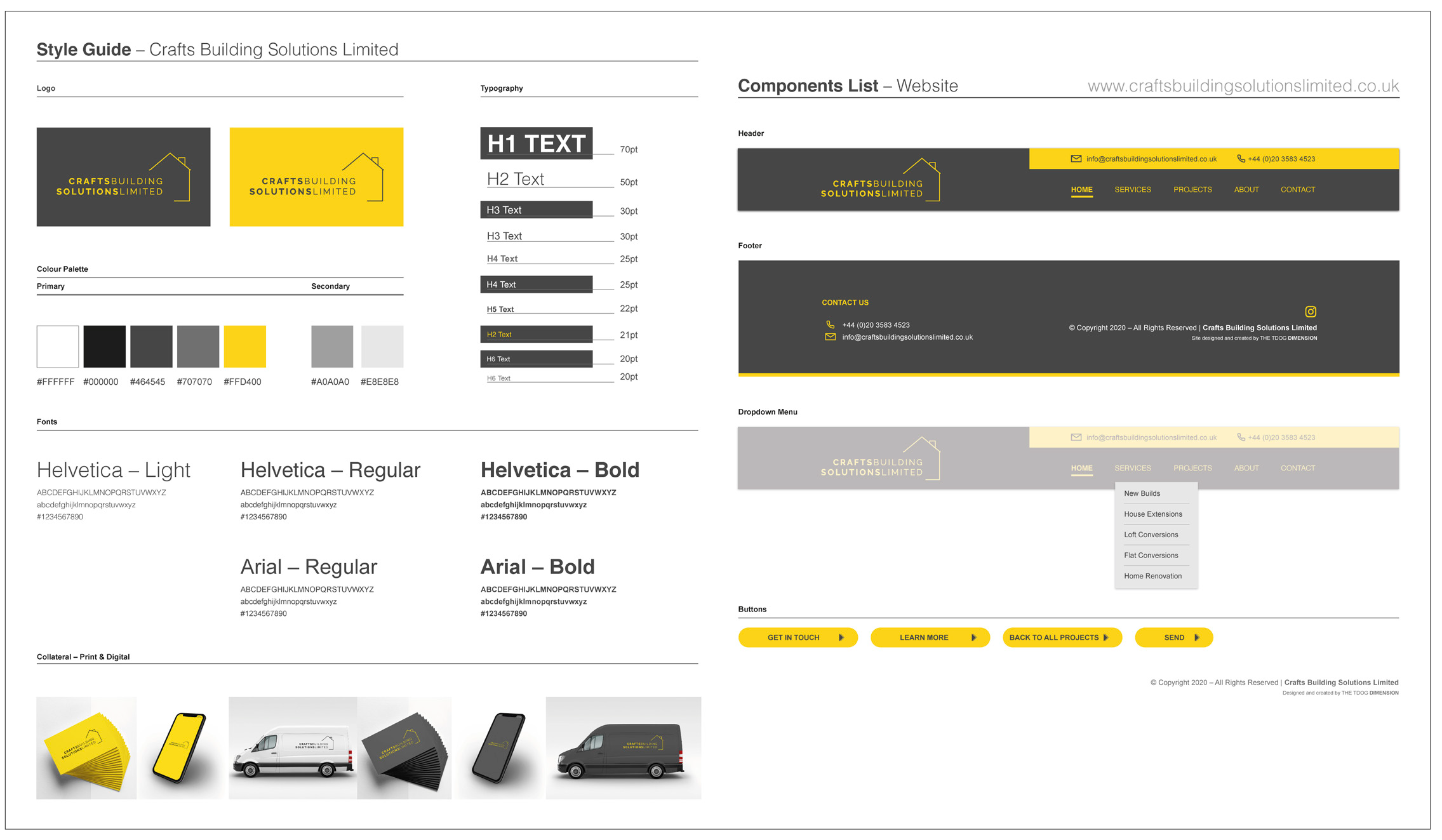
- Logo design and brand mockups, as the client had no existing identity

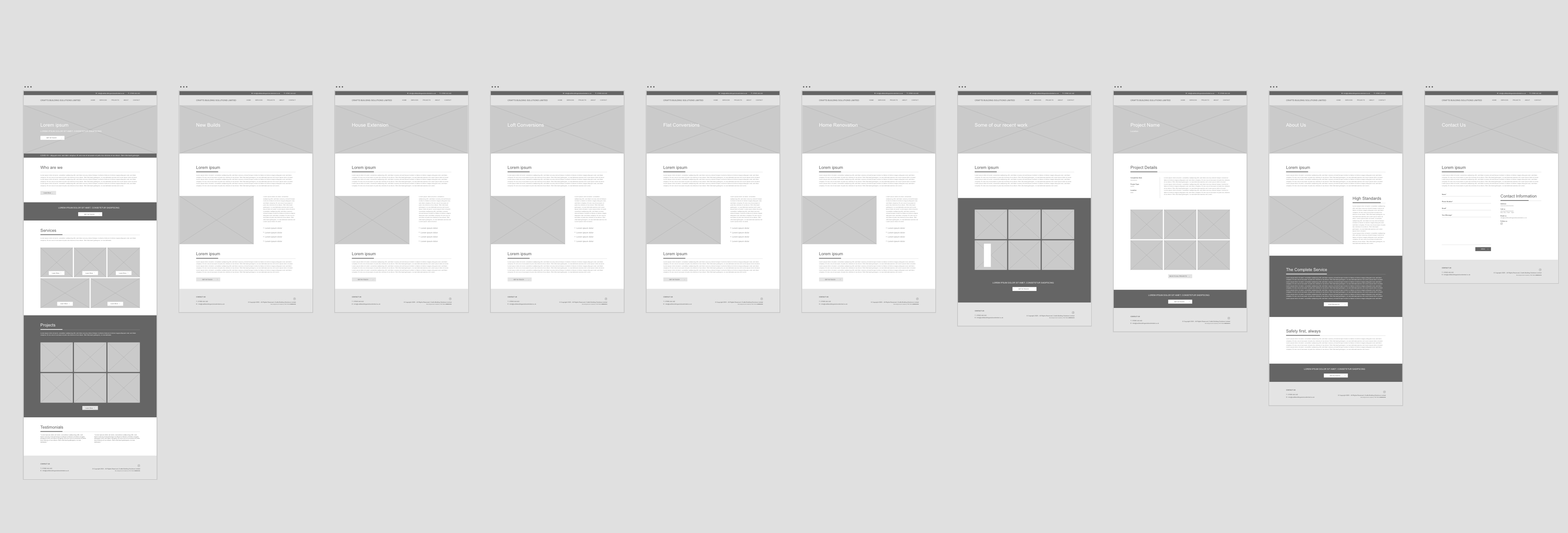
- Wireframing followed by high-fidelity prototyping to shape the visual and structural direction

- Development of a design system, including a style guide and component library

- User testing with final design refinements based on feedback

This approach ensured the final product was user-centred, intuitive, and aligned with both customer needs and business objectives.